Wood Fence Installation Virginia Beach
Build a secure backyard boundary with classic wood privacy fencing.

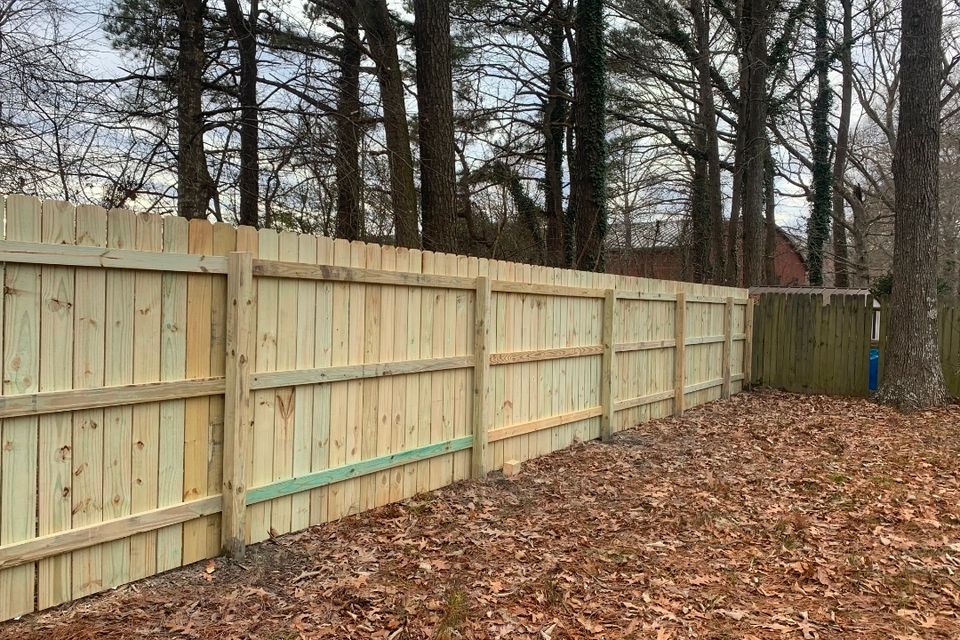
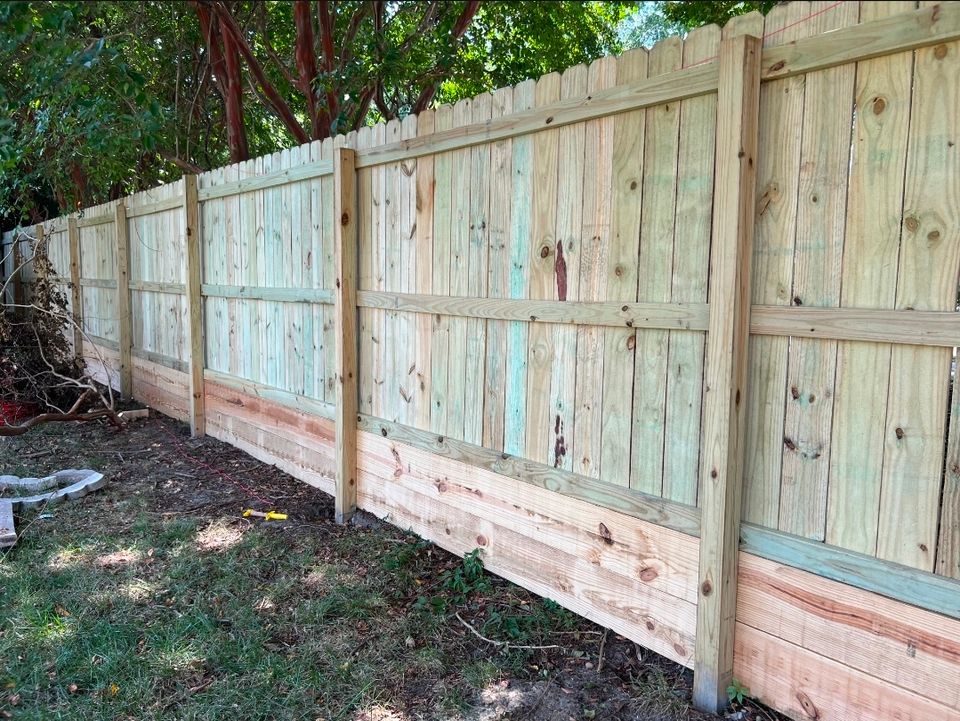
The installation process involves mapping out the fence run, digging structural post holes, securing the wood posts firmly in concrete, and attaching horizontal backer rails. Installers then secure individual vertical pickets across the framing, ensuring the entire structure is level, plumb, and follows the natural contour of the land.
Residential properties typically utilize vertical solid privacy styles, shadowbox designs that allow airflow, or classic spaced picket options for front yards. The traditional dog-ear cut is the most frequent choice for solid privacy perimeters, providing a clean, uniform look along the top edge of the yard barrier.
Protecting timber structures involves applying a high-quality water repellent sealant or exterior wood stain after the initial lumber has completely dried. Routine application of these topical coatings blocks deep moisture penetration, limits natural warping or twisting, and shields the wood fibers from graying due to direct sun exposure.
A standard, secure wood boundary layout requires spacing the vertical support posts no more than eight feet apart from center to center. Keeping this distance ensures the horizontal rails do not sag under the heavy weight of the pickets and provides strong wind resistance during local storms.
Structural posts must be set deep enough to resist soil movement and heavy wind loads on the panels. Contractors typically dig post holes to a depth of at least two feet, or deeper depending on local frost lines, filling the cavity with concrete to anchor the wood base securely.